Companies often struggle to move past basic Salesforce features into meaningful AI automation. The gap between a promising demo and a production system that actually qualifies leads or resolves issues feels wide for many teams, and the vendors circling that gap rarely make it narrower. Funnelists works to close it by focusing on grounded implementations rather than hype — agents that do real work against real data, built to ship rather than to impress in a sales meeting. This post explains what makes that approach different, the capabilities behind it, how engagements actually run, and who it is (and isn’t) a fit for.
What Makes Funnelists Different in Salesforce AI
Funnelists operates as a boutique consulting firm rooted in the Salesforce ecosystem, specializing in AI-first implementations centered on Agentforce. The approach prioritizes autonomous agents that handle multi-step tasks using real customer data instead of generic automation scripts. That sounds simple, but it is the opposite of how most AI projects start — with a flashy proof of concept that never survives contact with messy production data.
You see the difference in how projects are structured. Rather than jumping straight into agent configuration, Funnelists begins with business-problem identification and a thorough org audit. That step reveals whether your current setup can support reliable AI actions or whether foundational fixes are needed first. The work then moves through strategy, iterative build-and-test cycles, production deployment with monitoring, and knowledge transfer to your team — so you are not left dependent on the consultant after go-live.
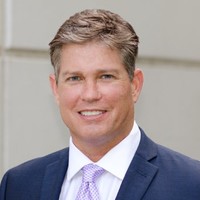
The firm is principal-led: senior Salesforce expertise stays involved throughout the engagement rather than handing the work to junior staff once the contract is signed. Founder Troy Amyett holds nine Salesforce certifications, including Agentforce Specialist, which keeps the technical decisions close to someone who has lived in the platform for years. That continuity matters most on exactly the kind of ambiguous, data-dependent work that agentic AI involves, where the gap between “configured” and “actually reliable” is where projects usually fail.
Core Capabilities That Drive Results
Funnelists builds autonomous agents for lead qualification, nurturing, meeting booking, and issue resolution across sales, service, and marketing. These agents reason through tasks using the Atlas Reasoning Engine while staying grounded in your unified customer data, so their actions reflect your actual records rather than plausible-sounding guesses.
The technical strengths cluster around integration and orchestration. Deep work with Data 360 connects disparate systems into a single source of truth that agents can trust. Advanced orchestration uses MCP (Model Context Protocol) for secure third-party tool integration and A2A (Agent-to-Agent Protocol) for communication between agents — including agents built on different platforms. Experience Cloud plays a central role when clients want self-service portals where agents operate directly in customer-facing interfaces.
Where this gets interesting is the multi-agent work. A single do-everything agent tends to become brittle and hard to govern, so the more durable pattern is a primary agent that routes work to focused specialists — one for lead scoring, another for follow-up, another for checking inventory or pulling a contract status from an outside system. MCP and A2A are what make that practical and secure across tools and vendors, and getting the boundaries and handoffs right is precisely the kind of architecture work that separates a system that scales from one that quietly breaks under real volume.
Internally, the firm uses its own AI-augmented delivery tooling for documentation and testing — always with human oversight. That efficiency keeps projects moving without sacrificing the boutique attention that larger firms tend to lose as headcount grows. Long-term partner networks provide extra capacity when a project needs it, while preserving the focused, senior-led approach clients sign up for.
How Funnelists Compares to the Alternatives
Most teams weighing Salesforce AI work are really choosing between three options, and it helps to be honest about the trade-offs of each. The large systems integrator brings scale and brand-name comfort, but smaller projects often get staffed with junior consultants and priced for enterprise budgets, and the people who understood your org in the sales cycle are rarely the ones doing the build. The independent freelancer is affordable and hands-on, but usually stretched thin and lacking the breadth to connect Agentforce, Data 360, and external systems into something reliable. Building in-house gives you control, but hiring a team that already understands agentic patterns is slow and expensive, and the learning curve gets paid for in production mistakes.
A boutique, principal-led firm sits deliberately between those: senior expertise on every engagement, a scope narrow enough to go deep on Agentforce specifically, and a delivery model that transfers knowledge to your team instead of creating permanent dependence. That positioning is not better for everyone — it is better for a company that wants serious technical depth without the overhead and detachment of a large integrator. Knowing which of the three you actually need is worth more than any vendor’s pitch, and a good consultant will tell you when you are not their fit.
How the Delivery Model Works in Practice
Imagine a manufacturer running Salesforce for sales and service but watching agents fail on complex quote approvals. Funnelists would start by mapping the existing processes and auditing data quality, identifying gaps in knowledge sources or guardrails before any agent goes live. Skipping that diagnosis is the single most common reason AI pilots stall, so it comes first by design.
The build phase configures actions, topics, and knowledge sources inside Agent Builder while setting explicit guardrails for what each agent may and may not do. Testing happens iteratively against real scenarios rather than synthetic demos, because an agent that performs well on a curated script and poorly on actual customer messages is worse than no agent at all. Once deployed, monitoring tracks performance and the client’s team receives training on ongoing optimization — the feedback loop that keeps an agent useful as the business changes.
This “build to ship, not to demo” philosophy shows up in an emphasis on measurable outcomes. Engagements focus on results — faster lead response, higher autonomous resolution, fewer dropped handoffs — rather than billable hours or staff augmentation. Clients typically need an existing Salesforce footprint and a willingness to address foundational issues before layering advanced agents on top.
Honest Considerations Before Engaging
Funnelists does not position itself for every situation, and naming the misfits up front saves everyone time. Government work, projects chasing the cheapest or fastest option, and organizations expecting pure AI hype fall outside the focus. The model suits companies ready to invest in proper audits and iterative refinement rather than a one-week miracle.
Pricing is custom and outcome-oriented, which means there are no public rates — an approach that fits boutique consulting but requires clear scope discussions early. The emphasis on real Salesforce complexity also means very small or very large enterprises may find a better fit elsewhere: a five-person startup rarely needs multi-agent orchestration, and a Fortune 100 may want a global systems integrator with thousands of seats.
Timing is the last honest factor. Success still depends on your data readiness and your willingness to start with audits rather than immediate agent deployment. The platform’s capabilities keep expanding — multi-agent orchestration features continue to mature through 2026 — but current implementations already deliver value when they are built on solid foundations rather than rushed onto shaky ones.
Getting Started with Funnelists
Begin by booking an introductory strategy call. These sessions are framed around answers rather than a pitch: you discuss your current Salesforce usage, your pain points, and your goals without immediate pressure to commit. For a team that has been burned by an oversold AI project before, that “diagnosis first” posture is usually a relief.
From there the process follows a clear sequence. Stakeholder interviews and process mapping come first, then a prioritized roadmap, then iterative configuration, testing, and deployment with monitoring and training built in. Ongoing optimization rounds out the engagement so the agents keep pace with your business. Resources on the Funnelists site — including an AIki glossary that explains terms like Agentforce and the protocols above, plus detailed write-ups of the approach — help you prepare for those conversations and understand what production-ready agents actually require.
To make the first call productive, come with one or two concrete pain points rather than a vague interest in “AI.” A specific, high-volume process — the leads that go cold before anyone follows up, the cases that pile up overnight, the quotes that stall in approval — gives the conversation something real to anchor on and makes it far easier to judge whether agentic automation is the right tool or whether a simpler fix would do.
Want help implementing Salesforce AI automation? Book a meeting to discuss your needs.
Read Next

Beyond Basic Bots: How to Connect Agentforce with Your Existing Business Systems
Learn practical strategies for integrating Agentforce with your existing business systems using MCP, APIs, and custom connections for seamless AI automation.

Agentforce vs Custom AI: 7 Decision Factors for Business Leaders
Choosing between Agentforce and custom AI? Explore 7 critical factors including cost, timeline, security, and flexibility to make the right decision for your business.
Salesforce Platform SDK Guide for Platform Architects Building React Apps
Platform architects facing React integration challenges on Salesforce can use the Platform SDK and Multi-Framework for native security and GraphQL access without custom OAuth layers.