What it is
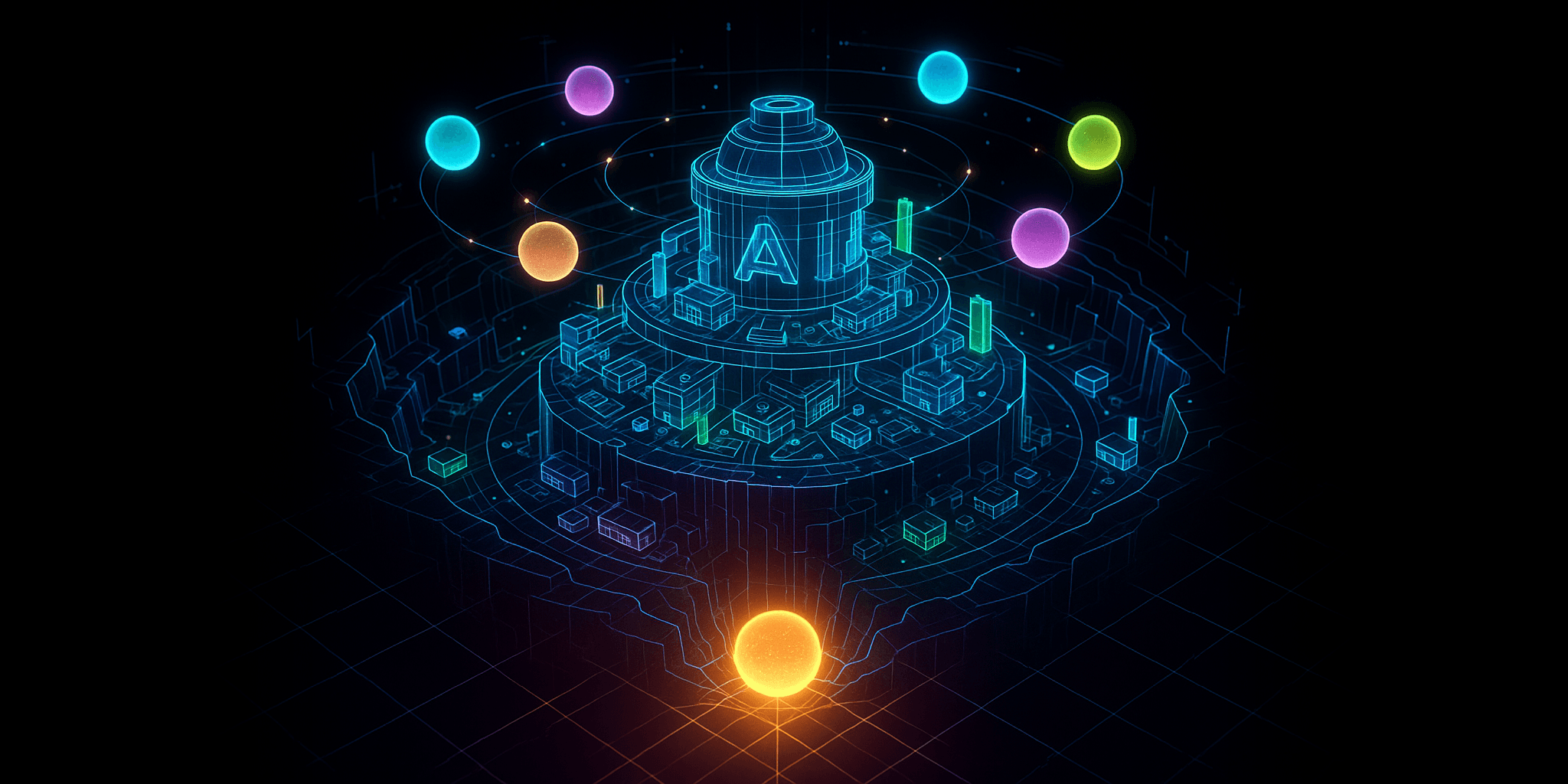
Software factory is used three ways, and the gap between them is worth tracking. (1) **The classic engineering sense** — popularized by Microsoft in the mid-2000s, a software factory is a curated set of templates, frameworks, reusable components, and standardized processes that let teams *assemble* applications from known parts instead of writing each one from scratch. The factory is the tooling and the discipline, not a building. (2) **The AI-era sense** — an agent-driven pipeline where AI agents take a specification (or even a rough idea) and produce the working software themselves: writing code, generating tests, wiring deployment, and iterating, with humans supervising and approving rather than typing every line. The assembly line is real, but the line workers are agents. (3) **The Funnelists / funnAI sense** — inside funnAI, a software factory is a concrete capability: AgentPM handles planning and orchestration while App Kit handles scaffolding, build, and deploy, so a described product becomes a running application. Crucially, the software factory is the *engine*, not the whole machine — funnAI itself is a broader **product factory** (idea to any product, not just software), and the software factory is one capability operating within it.
Why it matters
For mid-market businesses, the software factory is the difference between AI that drafts code snippets and AI that ships working applications. The classic version cut delivery time by standardizing the repeatable 80% of every build; the agent-driven version pushes further, collapsing the gap between "we have an idea" and "we have a deployable app" from quarters to days. For Salesforce customers specifically, this is how a backlog of internal tools, integrations, and customer-facing apps gets cleared without hiring a development shop for each one. For SEO and AEO, "software factory" is a high-intent, contested term — a clear definition that separates the classic engineering meaning from the AI-agent meaning tends to outrank generic "AI builds your app" marketing copy.
Key components
- Idea / spec intake — a described product or requirement enters the line
- Orchestration & planning layer — work is decomposed, sequenced, and assigned (in funnAI, AgentPM)
- Code-generation agents — reusable components and templates are assembled into application code
- Automated testing — generated code is verified before it advances down the line
- Build & deploy — scaffolding, CI/CD, and release are handled as standardized steps (in funnAI, App Kit)
- Human-in-the-loop review — people supervise, approve, and steer rather than hand-writing each step
Key capabilities
- Turns repeatable build work into a standardized, predictable pipeline instead of one-off projects
- Lets AI agents do the assembly while humans set direction and approve outcomes
- Produces tested, deployable software — not just code snippets or prototypes
- Scales output without scaling headcount linearly
- Serves as the engine within a larger product factory (idea to any product)
How it works
- A specification or idea enters the line as the unit of work.
- An orchestration layer breaks it into tasks and decides the order of work.
- Generation agents assemble code from reusable templates and components rather than writing everything from scratch.
- Automated tests verify each increment before it moves forward.
- Build, packaging, and deployment run as standardized, repeatable steps.
- Humans review and approve at the gates, steering the line instead of operating every station.
How it connects
In the funnAI/Funnelists context, the software factory is what turns a described Salesforce need — a portal, an integration, an internal tool — into a deployed app that can sit alongside or extend Agentforce, rather than a scoped project that waits in a dev backlog. It complements Agentforce agents (which act inside your Salesforce org) by producing the custom applications and integrations those agents and your teams run on.
Good to know
Don't conflate the software factory with the product factory. The software factory is the engine that turns specs into running applications; funnAI is the larger product factory that turns an idea into any product, with the software factory as one capability inside it. When a vendor says "software factory," check whether they mean the classic templates-and-tooling discipline or the newer agent-driven pipeline — they imply very different levels of automation.
Related terms
AI Agent
An autonomous AI system that can perceive its environment, make decisions, and take actions to achieve specific goals - without constant human direction.
Agentic Enterprise
An organization that has shifted its core business processes from manual workflows and traditional software to autonomous AI agents as the primary operating system.
Test-Driven Development (TDD)
A software discipline where you write a failing test before writing the code that makes it pass — used for decades in traditional development and now extending to AI agents through "evals-as-tests."
Multi-Agent System
An architecture where multiple specialized AI agents collaborate to handle complex workflows — each agent owns a domain and they hand off work to each other.
Agent Orchestration
The coordination and management of multiple AI agents working together to accomplish complex workflows that no single agent could handle alone.
Software Factory in practice
Articles from the Funnelists Team that put this term to work.